
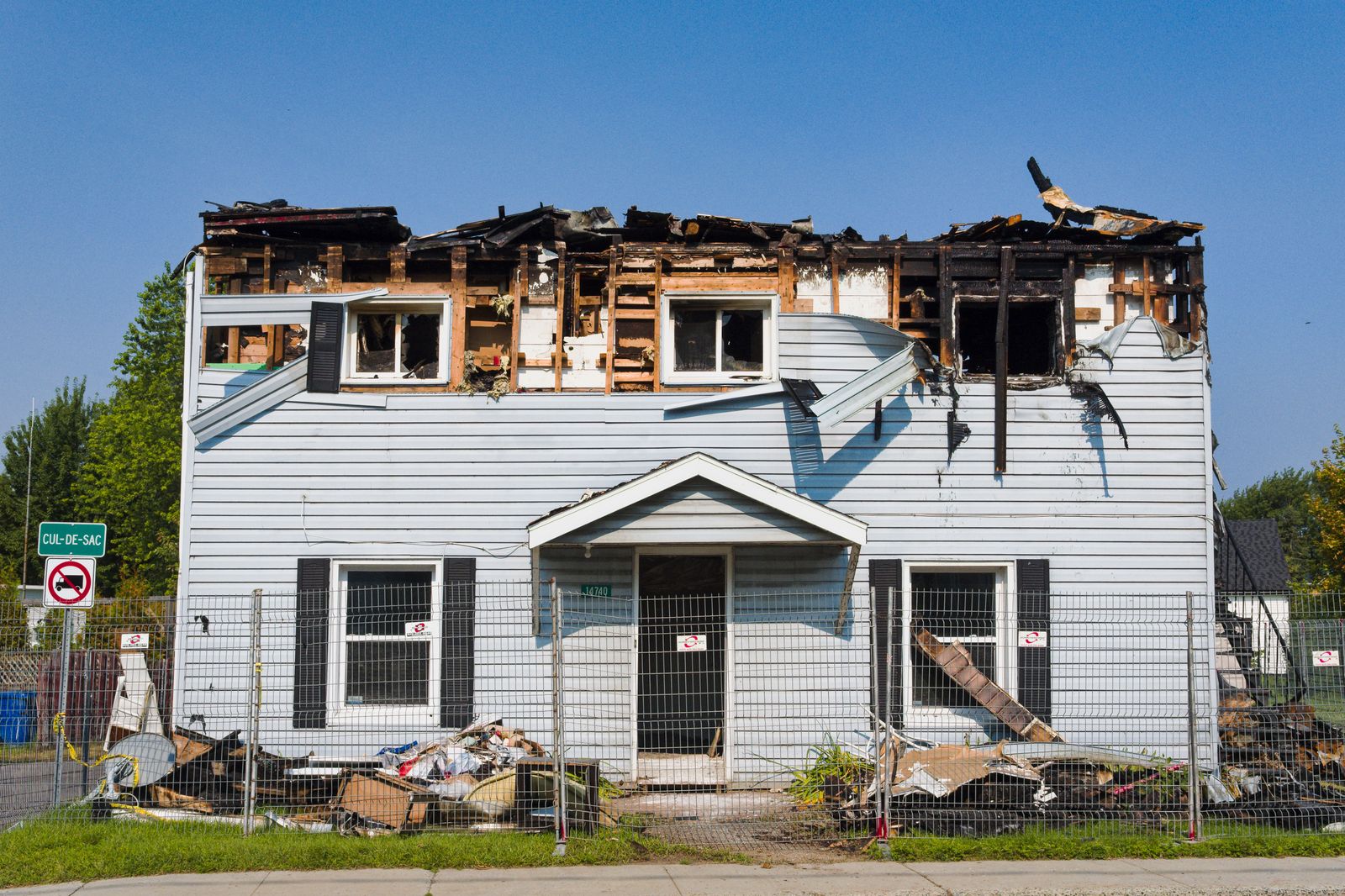
Once the fire department has cleared a scene, it can be tempting to think the hard part is over. In reality, smoke and soot keep causing damage after the flames are out, and cleaning up incorrectly can spread residue or drive odor deeper into materials.
Wait for the All-Clear
Don't re-enter a fire-damaged structure until fire officials confirm it's structurally safe and the air quality is acceptable. Weakened framing and lingering smoke aren't always obvious from a doorway.
What’s Safe to Clean Yourself
Once you're cleared to enter, lightly soot-affected hard surfaces — glass, tile, some metals — can sometimes be wiped with a dry sponge before any liquid cleaner, since water can smear soot and make it harder to remove. Wear gloves and a mask, and avoid vigorous rubbing that grinds soot particles further into a surface.
What Should Be Left to Professionals
Upholstery, carpet, drapery, and anything porous tend to hold onto smoke odor in ways that surface cleaning won't resolve. HVAC systems that ran during or after the fire can also circulate soot throughout the home, which is a job for fire and smoke restoration professionals with the right equipment, not a household vacuum.
Why Smoke Odor Lingers
Smoke particles are small enough to embed into porous materials — drywall, insulation, fabric, even wood — rather than sitting on the surface. That's why odor can persist well after visible soot is gone, and why treatment usually involves more than air fresheners or a single deep clean. Sanitization paired with targeted odor treatment addresses the residue that's actually causing the smell.
Protecting Belongings From Further Damage
Salvageable belongings are often better off moved out of a fire-damaged space entirely while cleanup and repair happen, both to protect them from further soot exposure and to give repair crews clear access. A packout handles that move — and the inventory that goes with it — so nothing gets lost or overlooked in the process.
Fire damage cleanup is one of the areas where doing it yourself can genuinely make things worse — soot ground into a surface or odor pushed deeper into a wall is harder to fix than if it's addressed correctly the first time.